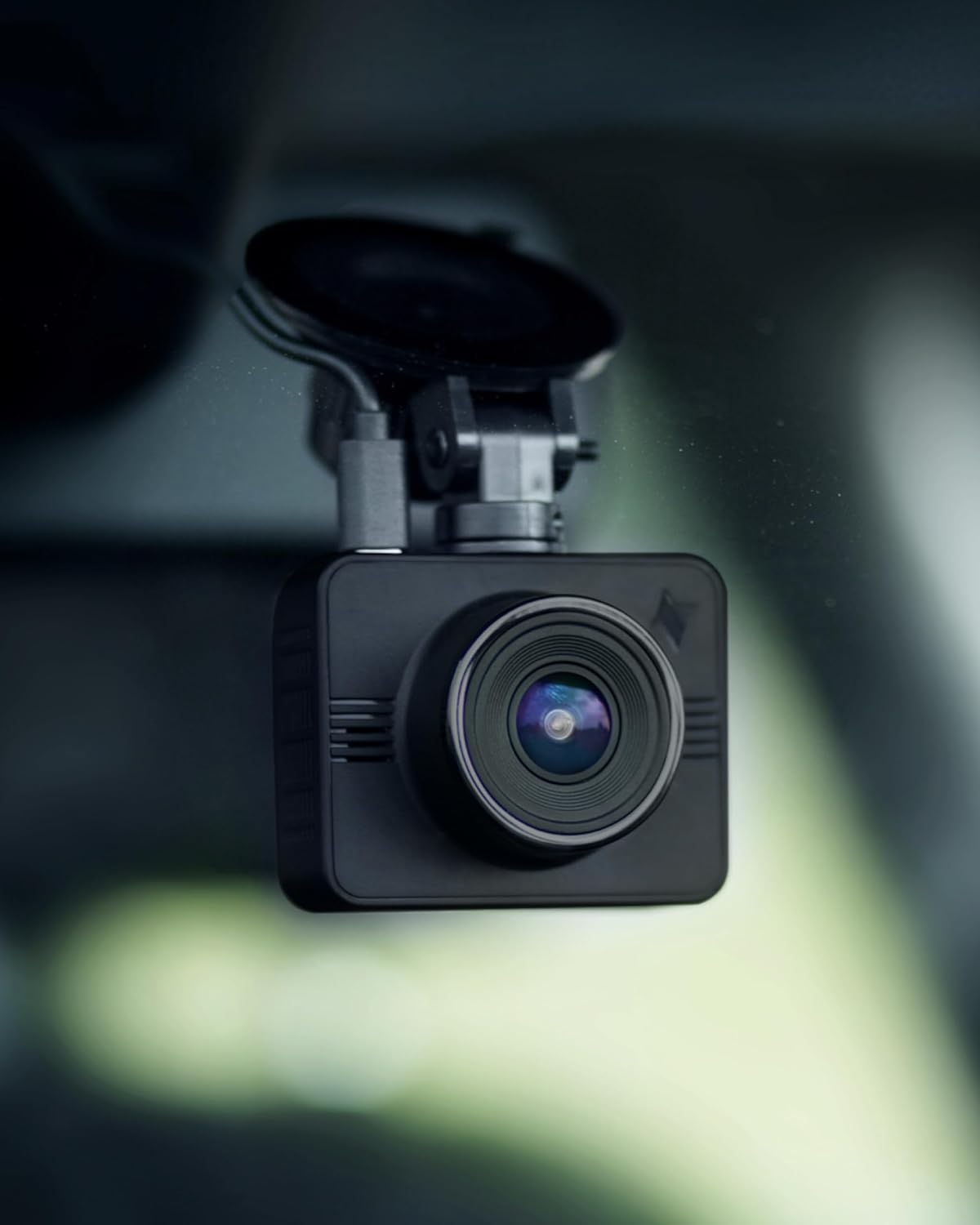
Dash cams aren’t just for insurance fraud prevention anymore. They’re your witness when someone backs into you in a parking lot, your evidence when a driver runs a red light, and your documentation when questionable police stops happen. The good news? You don’t need to spend $300+ to get solid protection. The budget dash cam market has exploded with options that deliver 4K recording, parking mode, and WiFi connectivity under $100.
Best Dash Cams Around $100: Quick Comparison Table
| Dash Cam | Resolution | Key Features | Price (Amazon) |
| 70mai A800S | 4K Front & Rear | STARVIS, 5GHz WiFi, GPS, ADAS, 24H Parking | $78 – Buy Now |
| ROVE R2-4K | 4K Front | GPS, Loop Recording, Night Vision | $77 – Buy Now |
| Navycrest 4K | 4K Front / 1080P Rear | 5G WiFi, 24H Parking, Gravity Sensor | $47 – Buy Now |
| WOLFBOX i07 | 4K Front & Rear | STARVIS 2, GPS, WDR Night Vision, 5.8GHz WiFi | $107 – Buy Now |
| REDTIGER F7NP | 4K Front & Rear | STARVIS, GPS, WDR, 170° Wide Angle | $85 – Buy Now |
| GKU Dash Cam | 4K Front / 1080P Rear | 5.8GHz WiFi, GPS, App Control, 24H Parking | $55 – Buy Now |
| Nexar Beam | 1080P | Cloud storage, GPS, 24H Parking, App-based | $84 – Buy Now |
P.S: Prices may vary from time to time.
70mai 4K Dash Cam Front and Rear with STARVIS (A800S)
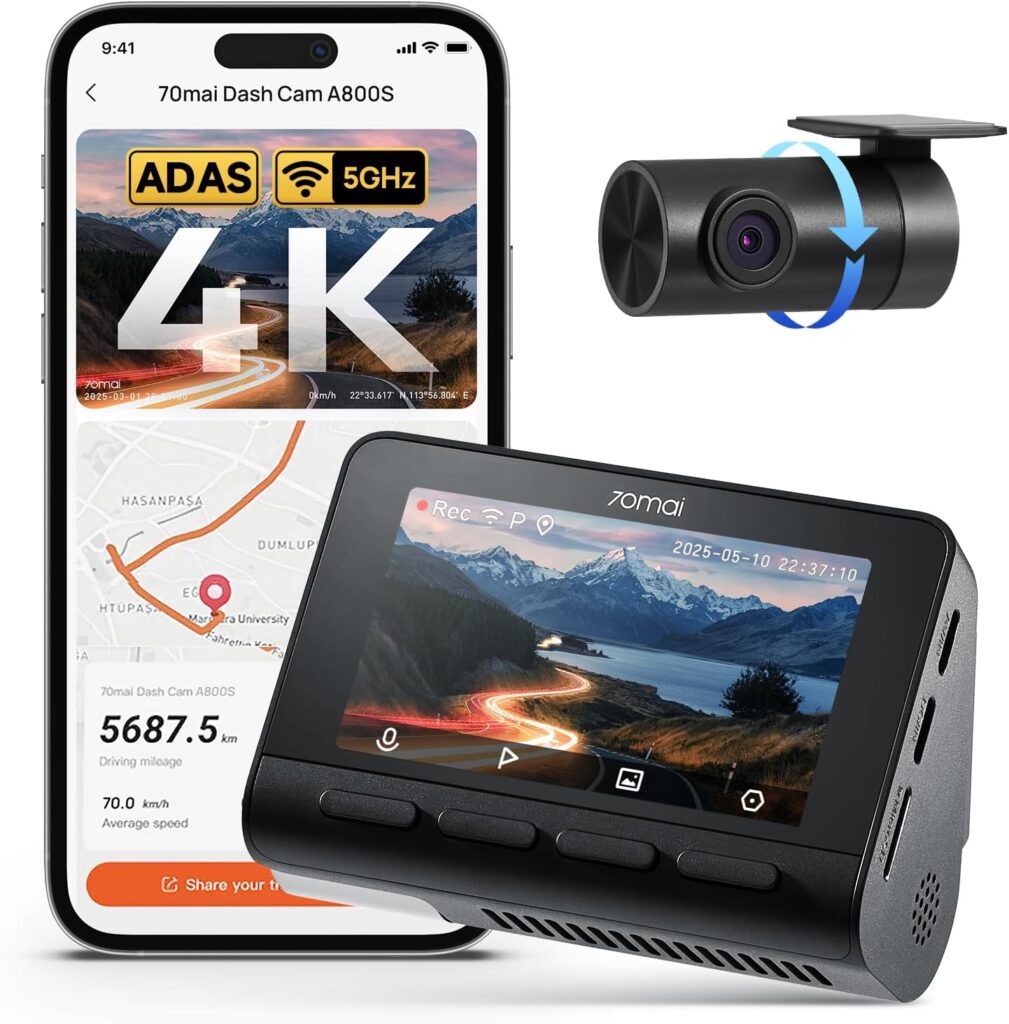
Quick Highlights:
- STARVIS sensor delivers exceptional low-light performance
- 4K front camera with 1080P rear coverage
- Built-in 5GHz WiFi with GPS tracking
- 24-hour parking mode with time-lapse recording
- Price – $78 – Buy Now
The 70mai A800S stands out immediately with its STARVIS sensor technology, which genuinely improves night recording beyond typical marketing claims. Where most budget dash cams struggle in dim parking garages or unlit streets, the STARVIS sensor pulls usable footage from situations that would leave cheaper cameras recording black screens.
The 4K front camera captures license plates clearly even at highway speeds, while the 1080P rear camera documents what’s happening behind you without the pixelated mess some dual-camera setups produce.
The 5GHz WiFi matters more than you’d think. Older 2.4GHz systems crawl when transferring 4K footage to your phone, sometimes taking 5-10 minutes for a single clip. The 5GHz connection cuts that dramatically, letting you pull footage quickly after an incident. GPS tracking adds location and speed data to your recordings, which insurance companies and police actually use when reviewing footage.
The 24-hour parking mode requires hardwiring but switches to time-lapse recording to conserve power, capturing hours of parking lot activity without draining your battery or filling your SD card in 30 minutes.
Pros
- STARVIS sensor genuinely improves night footage quality
- 5GHz WiFi transfers files quickly to smartphone
- ADAS features provide lane departure and collision warnings
Cons
- 3″ screen feels cramped compared to mirror-style displays
- Hardwiring kit sold separately for parking mode
ROVE R2-4K Dash Cam
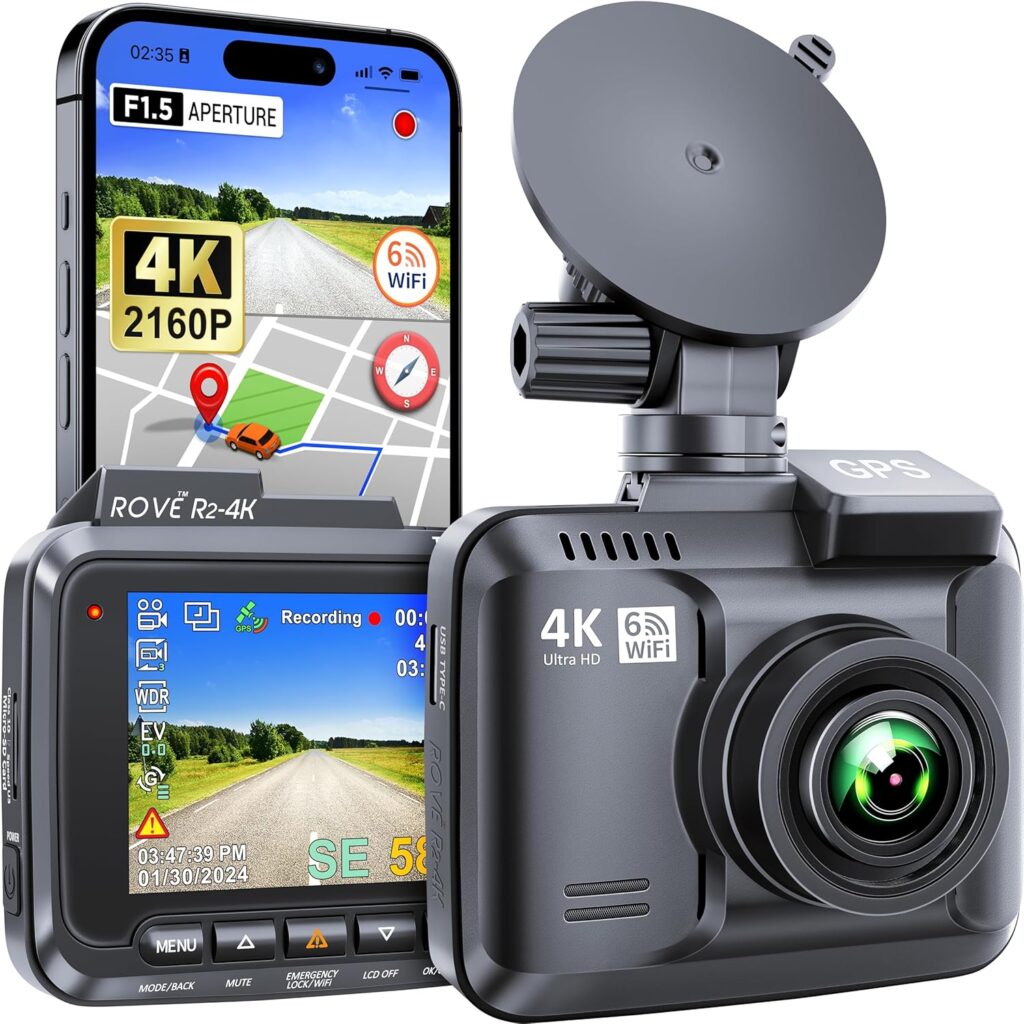
Quick Highlights:
- 4K UHD front recording at 30fps
- Built-in GPS tracks speed and location
- WiFi app control for easy video management
- Supercapacitor instead of battery for heat resistance
- Price – $77 – Buy Now
The R2-4K takes a single-camera approach but does it well, focusing resources on front recording quality instead of spreading them across front-and-rear setups. The 4K resolution at 30fps captures detail that holds up when you need to zoom into footage or read street signs in the background.
What distinguishes ROVE’s approach is the supercapacitor power system instead of traditional lithium batteries. In hot climates where dash cams sit in 140°F+ windshields, lithium batteries degrade or fail within a year. The supercapacitor handles extreme heat without degradation, making this a smart pick if you live somewhere that actually gets hot summers.
Built-in WiFi lets you review and download footage through ROVE’s app without constantly ejecting your SD card, and the GPS module embeds your location and speed into recordings. This data becomes crucial when someone claims you were speeding or disputes where an incident occurred.
The parking mode activates when the G-sensor detects impact, recording for a set period to capture what happened. Without a rear camera, you’re not documenting everything behind you, but for a clean single-camera setup focused on what’s ahead, the R2-4K delivers reliable performance without unnecessary features.
Pros
- Supercapacitor handles extreme heat better than batteries
- 4K resolution captures clear, detailed footage
- GPS and WiFi integration works smoothly
Cons
- Single camera misses rear coverage
- Parking mode requires hardwire kit purchase
Navycrest 4K Dash Cam Front and Rear
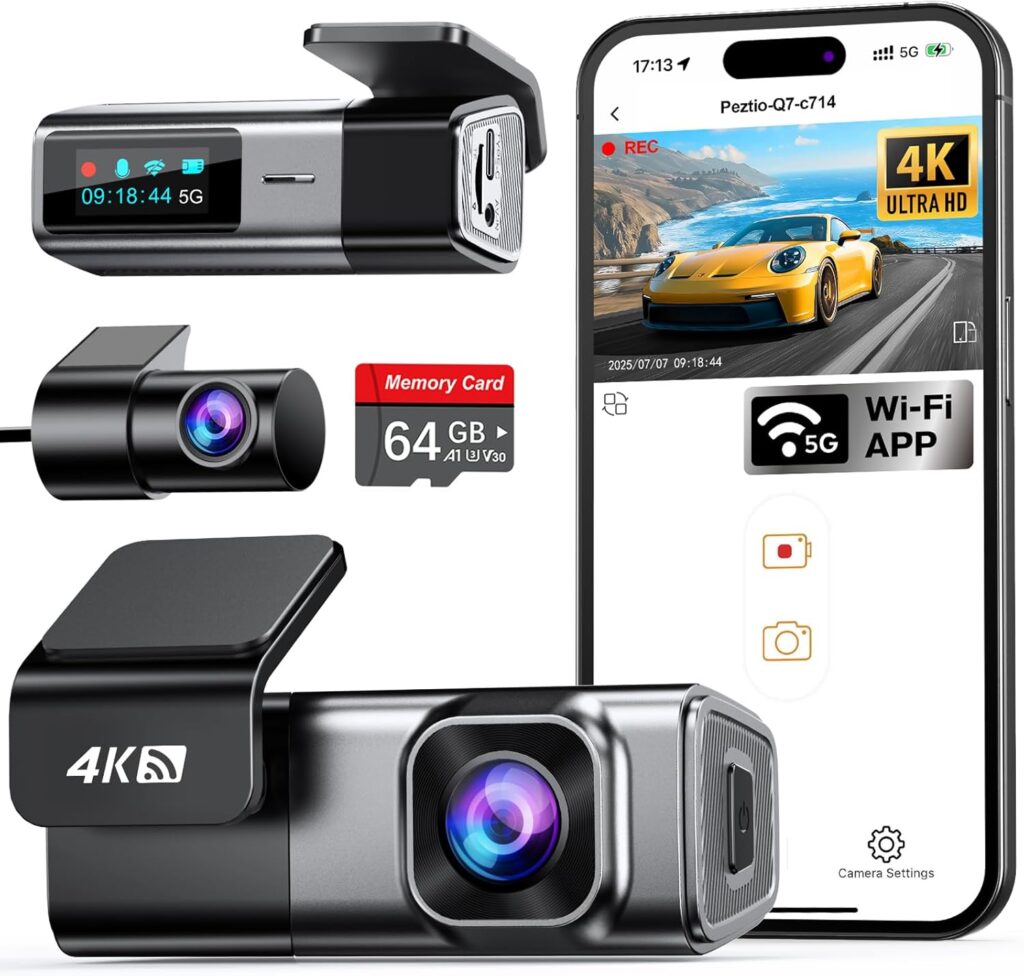
Quick Highlights:
- 4K front and 1080P rear dual camera system
- 64GB SD card included (saves $20-30)
- 5G WiFi for fast video transfers
- 24-hour parking mode with motion detection
- Price – $47 – Buy Now
Navycrest bundles everything you need to start recording immediately. The included 64GB SD card eliminates the separate purchase most dash cams require, and it’s not cheap junk-it’s a proper high-endurance card rated for constant recording. The 4K front and 1080P rear combination gives you comprehensive coverage, documenting both directions without compromise.
The 5G WiFi (actually 5GHz, not cellular 5G) connects to your phone for quick footage downloads, though the app interface feels less polished than established brands.
The 24-hour parking mode activates when the G-sensor detects motion or impact near your parked vehicle, automatically recording the incident before shutting back down to conserve power. Loop recording manages storage automatically, overwriting the oldest footage when the SD card fills up while protecting locked files from deletion.
The WDR (Wide Dynamic Range) technology balances exposure in high-contrast situations, preventing blown-out skies or pitch-black shadows that make footage useless. For someone who wants to unbox, install, and start recording without buying accessories or dealing with setup complexity, Navycrest removes the barriers.
Pros
- Included 64GB card eliminates separate purchase
- Dual camera coverage documents front and rear
- 5GHz WiFi speeds up file transfers
Cons
- App interface less refined than competitors
- Gravity sensor sometimes over-sensitive
WOLFBOX i07 Mirror Dash Cam
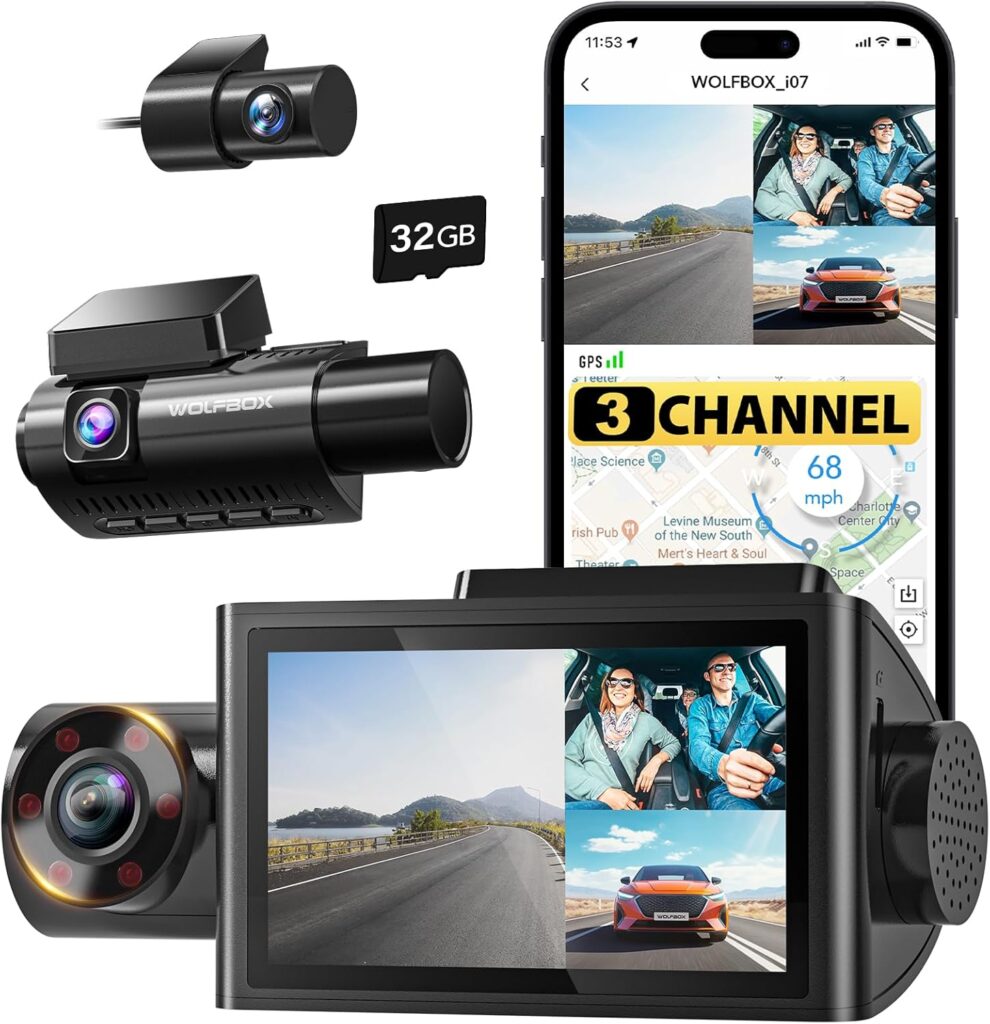
Quick Highlights:
- 3″ full-screen mirror display
- 2.5K front camera with 1080P rear
- Touch screen interface for easy control
- Split-screen view shows both cameras simultaneously
- Price – $107 – Buy Now
The 2.5K front resolution sits between 1080P and 4K, providing noticeably better detail than 1080P without the file size and processing demands of true 4K, making i07 a very capable dash cam. The 1080P rear camera does double duty, functioning as both a dashcam and a backup camera when you shift into reverse.
The split-screen display shows both front and rear feeds simultaneously, letting you monitor everything at a glance instead of switching between views. Touch controls feel intuitive if you’ve used any smartphone, making settings adjustments simple instead of requiring you to navigate cryptic button combinations.
The mirror design means no separate screen mount, no extra cables dangling, and no obstruction of your view. Loop recording, G-sensor protection, and parking mode cover the essential functionality, while the mirror integration provides the clean aesthetic some people prefer over traditional dash cam setups.
Pros
- Touch interface simplifies operation
Cons
- 2.5K not quite as sharp as full 4K
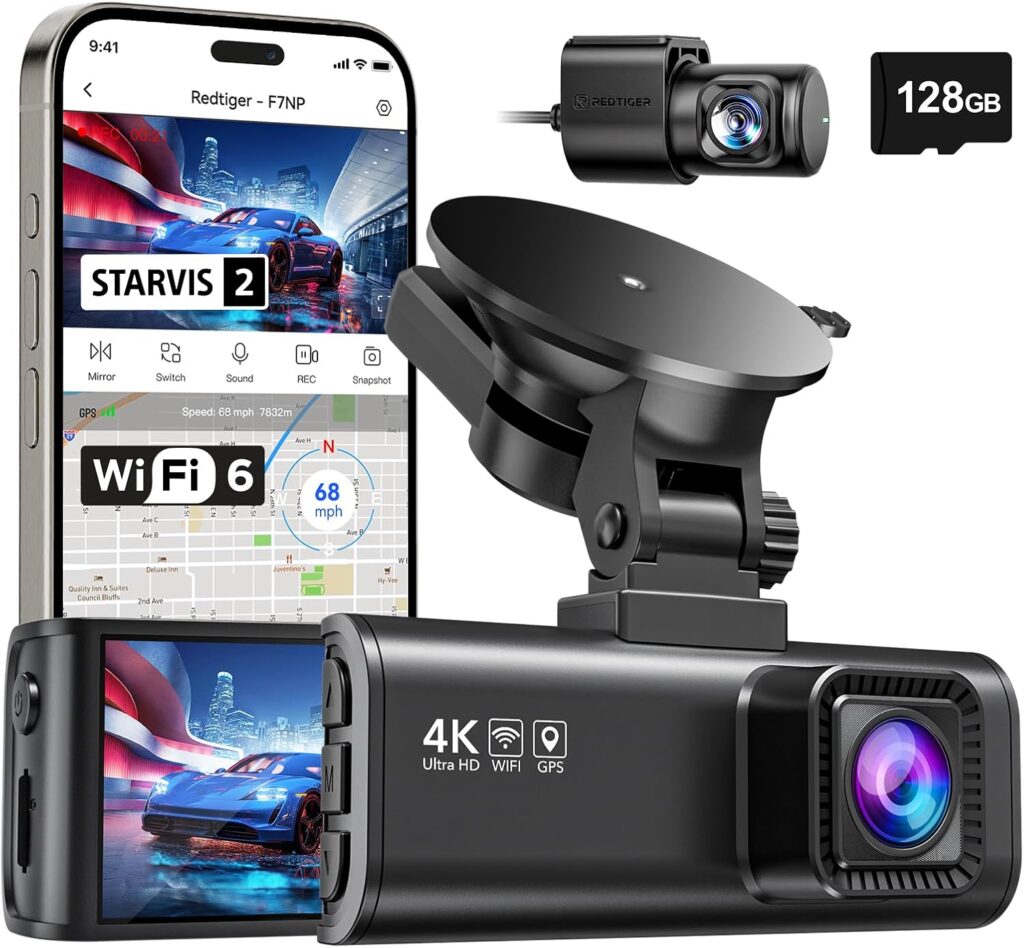
REDTIGER 4K Dash Cam Front Rear with STARVIS 2 (F7NP)
Quick Highlights:
- STARVIS 2 sensor for enhanced low-light performance
- 4K front with 1080P rear recording
- 64GB SD card included in package
- 5.8GHz WiFi enables 20MB/s download speeds
- Price – $85 – Buy Now
The F7NP brings STARVIS 2 sensor technology to the budget segment, improving on the original STARVIS with better light sensitivity and reduced noise in dark conditions. This matters when you’re trying to capture footage in poorly-lit areas where standard sensors produce grainy, unusable video.
The 4K front camera pulls detail from shadows and highlights simultaneously thanks to WDR processing, while the 1080P rear camera documents what’s happening behind you with clarity that actually helps identify vehicles and license plates.
WiFi performance at 5.8GHz pushes transfer speeds to 20MB/s, which means pulling a few minutes of 4K footage takes seconds instead of the minutes you’ll wait with slower systems. The included 64GB SD card handles hours of recording before loop recording kicks in to overwrite old footage. GPS tracks your route, speed, and location, embedding that data into your recordings for insurance and legal purposes.
The 24-hour parking mode monitors your vehicle with time-lapse recording when parked, capturing long periods without filling your entire SD card in an afternoon. REDTIGER’s build quality feels solid compared to some budget options that creak and flex, suggesting this will hold up to daily use and temperature extremes.
Pros
- STARVIS 2 sensor produces usable night footage
- Fast WiFi speeds eliminate waiting for downloads
- Included 64GB card saves separate purchase
Cons
- Requires hardwire kit for full parking mode functionality
- App occasionally disconnects during transfers
GKU Dash Cam Front and Rear Camera 4K+1080P
Quick Highlights:
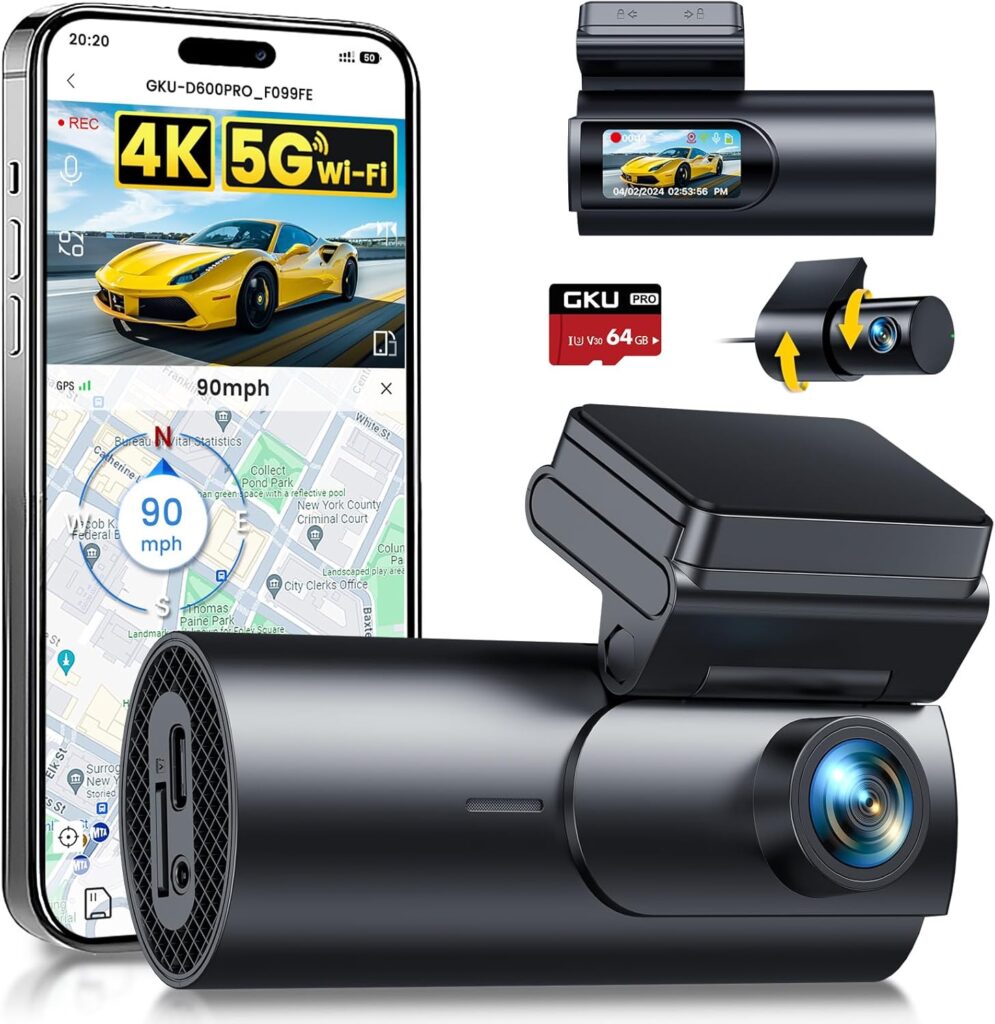
- 4K front and 1080P rear dual camera
- 64GB SD card included with support up to 256GB
- 5.8GHz WiFi with GPS tracking
- Compact 1.47″ display reduces windshield obstruction
- Price – $55 – Buy Now
The GKU takes the minimalist approach with a tiny 1.47″ display that barely intrudes on your windshield real estate while still providing enough screen to confirm the camera’s recording. The 4K front camera captures sharp footage that stands up to zooming and cropping when you need to read license plates or street signs, paired with a 1080P rear camera that documents what’s happening behind you.
The included 64GB SD card means you’re ready to record immediately, with support for cards up to 256GB if you want extended recording time before loop recording overwrites old footage.
WiFi connectivity at 5.8GHz paired with GPS tracking gives you both fast file transfers and location data embedded in your recordings. The app control lets you adjust settings, review footage, and download clips without pulling the SD card or connecting cables.
WDR technology balances exposure in tricky lighting, preventing the washed-out skies or black shadows that make footage useless for identifying details. The 24-hour parking mode with motion detection watches your vehicle when parked, automatically recording when it detects activity and shutting down to conserve power when nothing’s happening.
For someone who wants comprehensive dual-camera coverage without a big screen blocking their view, the compact GKU delivers functionality without visual intrusion.
Pros
- Tiny display minimizes windshield obstruction
- Dual camera provides comprehensive coverage
- Included SD card and fast WiFi eliminate setup hassles
Cons
- Small screen makes initial setup more difficult
- App interface could be more intuitive
Nexar Beam GPS Dash Cam
Quick Highlights:
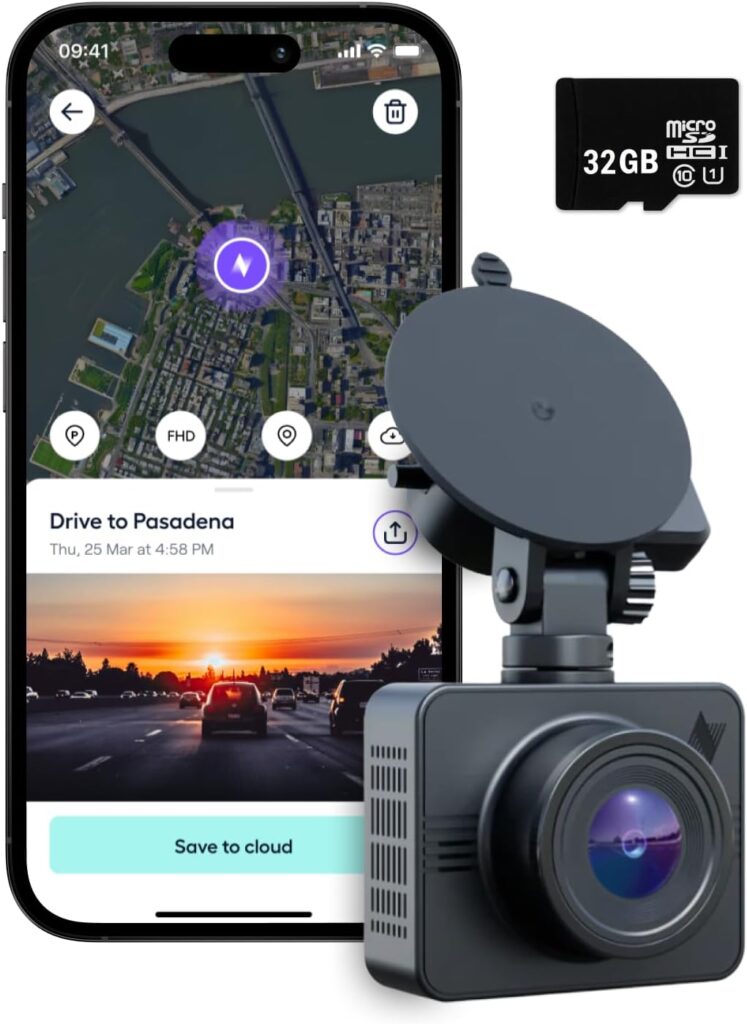
- Unlimited cloud storage with 1-year subscription included
- Built-in GPS tracks location and speed
- 32GB SD card included for local storage
- 24-hour parking mode with impact detection
- Price – $84 – Buy Now
The Nexar Beam shifts the storage model entirely, automatically uploading footage to cloud storage instead of relying solely on SD cards that can fail, get stolen with your car, or fill up at inconvenient times. The included 1-year Nexar Classic subscription provides unlimited cloud storage for incidents, though you’ll pay annually after that first year.
This approach means your footage survives even if someone steals your dash cam or damages it during an incident – the video’s already safely uploaded.
The 1080P resolution won’t wow you compared to 4K competitors, but it captures license plates and essential details adequately for insurance and legal purposes. GPS tracking embeds location and speed data into recordings, which matters when documenting where incidents occurred or proving you weren’t speeding.
The dash cam connects to your phone via Bluetooth and WiFi, automatically uploading significant events while you’re driving. The 24-hour parking mode requires a hardwire kit but activates when it detects impact, recording the incident and immediately uploading it to the cloud. For someone who values cloud backup over maximum resolution or wants footage that survives physical damage to the camera, Nexar’s approach makes sense despite the ongoing subscription cost.
Pros
- Cloud storage protects footage even if camera destroyed
- Automatic uploads eliminate manual file management
- GPS and incident detection work reliably
Cons
- 1080P resolution lags behind 4K competitors
- Requires ongoing subscription after first year
- Single front camera misses rear coverage
Conclusion
Even on a budget, you can find dash cams that offer clear video, reliable night vision, and useful features like parking mode or GPS tracking. The key is to focus on what matters most for your driving needs – whether it’s dual-camera coverage, cloud backup, or app control.
Also Read: